
The Sun Also Rises
Overview
Ernest Hemingway’s The Sun Also Rises is an American modernist novel and his first full-length novel. It was first published in 1926, following the experimental short-fiction collection In Our Time (1925), and appeared in the United States in October of that year. The book is also known by the alternative title Fiesta. Although its first reception was mixed, it is now widely regarded as one of Hemingway’s greatest and most important works, as well as a defining novel of the so-called Lost Generation.
Plot
The narrator, Jake Barnes, is an American journalist living in Paris. He was wounded in the First World War, and his injury has left him unable to have a conventional sexual relationship. Jake loves Lady Brett Ashley, an independent and charismatic British woman, but their intimacy cannot become an ordinary partnership. Their circle includes Robert Cohn, a talented but insecure writer; Mike Campbell, a troubled, boastful expatriate; and Pedro Romero, a young Spanish bullfighter whose discipline and concentration sharply contrast with the group’s restless habits.
The early chapters follow the expatriates through Paris cafés, restaurants, and bars. They drink, argue, flirt, and move from one social encounter to another, yet their constant activity rarely produces purpose. The group then travels to Pamplona for the Festival of San Fermín, where they watch the running of the bulls and the bullfights. The festival’s noise and ritual temporarily give shape to their lives, while also intensifying jealousy and conflict. Brett is drawn to Romero’s youth, courage, and artistic control in the ring. Jake, despite his pain, helps bring them together. After the festival, the characters scatter, and Jake and Brett meet again in Madrid. Their final conversation recognizes both their continuing love and the impossibility of the life they imagine they might have shared.
Themes and Style
The novel’s central historical pressure is the aftermath of the First World War. Hemingway does not present war through extended battlefield scenes; instead, he shows how it persists in damaged bodies, broken expectations, sexual frustration, unstable relationships, and compulsive drinking. Jake’s wound is both intensely personal and emblematic of a generation whose physical and moral assumptions have been shattered.
The expatriates possess mobility, money, and opportunities for pleasure, but they cannot turn those advantages into meaning. Their drinking, travel, affairs, and arguments become ways of covering emotional emptiness. Brett and Jake’s relationship exposes the gap between desire and reality: they love each other, yet the conditions of their lives prevent them from forming the relationship they want.
Bullfighting provides the novel’s most important counterpoint to expatriate aimlessness. In the ring, Romero acts within a demanding code of timing, courage, danger, and form. His performance suggests an ideal of dignity and artistic control, although the novel does not make him a simple savior. Bullfighting is also a violent ritual shaped by mortality, and its presence joins beauty to danger and celebration to death.
Hemingway’s prose is spare, concrete, and restrained. He relies on dialogue, physical detail, repetition, and silence rather than explaining every feeling. Much of the emotional meaning lies beneath the surface, a method later associated with his “iceberg” principle. The plainness of the narration therefore conceals, rather than eliminates, psychological depth.
Background and Legacy
Hemingway wrote from his experience as a journalist, a wartime participant, an expatriate in Paris, and a traveler fascinated by Spain and bullfighting. The novel’s settings and social world reflect those experiences, but the book is not merely autobiography; it reshapes them into a carefully controlled fictional pattern. Paris represents restless modern life, while Pamplona offers a temporary world of ritual and order that cannot permanently repair the characters’ losses.
The novel established Hemingway as a major literary voice and helped define a new American style: economical, direct, and powerful through implication. Its influence extends beyond its period setting. Readers continue to return to it for its treatment of trauma, masculinity, sexuality, friendship, ethical conduct, and the search for dignity after catastrophe. Its enduring status comes from the way a specific story of expatriates in the 1920s becomes a broader meditation on how people live when history has made their former ideals impossible.
About the Author
Early Life and Education
Ernest Miller Hemingway was born on July 21, 1899, in Oak Park, Illinois, a suburb near Chicago. His father, Clarence Hemingway, was a physician who encouraged close observation of nature and an active outdoor life; his mother, Grace Hall Hemingway, was a musician and teacher. Fishing, hunting, camping, and the natural world became lasting elements of Hemingway’s imagination. He grew up in Oak Park and completed his secondary education there. Rather than attend college, he began working at seventeen in a newspaper office in Kansas City. The discipline of reporting taught him to value accurate detail, physical action, short sentences, and economy of expression—qualities that later shaped his fiction.
War, Journalism, and Paris
After the United States entered the First World War, Hemingway joined a volunteer ambulance unit attached to the Italian army. He served at the front, was seriously wounded, and received decorations from the Italian government. His wartime injury, hospitalization, and firsthand knowledge of violence made courage, fear, death, bodily damage, and conduct under pressure central concerns of his writing.
After returning to the United States, he worked as a reporter for Canadian and American newspapers. He was sent back to Europe to cover events including the Greek Revolution, gaining experience as an observer of political upheaval and public life. During the 1920s he became part of the community of American expatriate writers in Paris. There he encountered figures such as Gertrude Stein, Ezra Pound, and F. Scott Fitzgerald. Paris, postwar Europe, and his fascination with Spain and bullfighting supplied important material for his early career.
Hemingway published In Our Time in 1925, an experimental collection that established many features of his developing style. His first full-length novel, The Sun Also Rises, followed in 1926 and brought him major recognition. Its restrained prose and portrait of disillusioned expatriates made him a prominent voice of modern American fiction.
Major Works and Recognition
Hemingway’s major books engage with war, love, political conflict, masculinity, endurance, and moral responsibility. A Farewell to Arms, published in 1929, drew on the emotional and historical legacy of the First World War. In 1937 he traveled to Spain during the Spanish Civil War, reporting from the front and supporting the Spanish Republican cause. His play The Fifth Column appeared in 1937, and his major novel about the war, For Whom the Bell Tolls, was published in 1940. That novel combined political commitment with questions about sacrifice, solidarity, and individual responsibility.
The 1950 novel Across the River and into the Trees received a mixed critical response. Hemingway answered doubts about his later work with The Old Man and the Sea, published in 1952. Its story of an old fisherman’s struggle with a great marlin explores isolation, defeat, endurance, and dignity through highly controlled prose. The book won the Pulitzer Prize for Fiction in 1953. Hemingway received the Nobel Prize in Literature in 1954, recognition of both his powerful narrative art and his influence on modern literary style.
Final Years and Reputation
Hemingway continued to draw on travel, journalism, war, hunting, fishing, and bullfighting throughout his career. His public image often emphasized adventure, toughness, and bluntness, but his literary achievement rests on more than personal legend. His fiction repeatedly examines how people preserve a code of behavior when circumstances cannot be mastered. Beneath the direct surfaces of his prose are sustained meditations on vulnerability, grief, desire, and moral choice.
In his later years Hemingway suffered from serious physical and psychological problems. He died at his home in Ketchum, Idaho, on July 2, 1961, at the age of sixty-one. He remains one of the most influential American writers and journalists of the twentieth century and a leading figure associated with the Lost Generation. His economical, understated style influenced novelists, short-story writers, and reporters around the world. Works including The Sun Also Rises, A Farewell to Arms, For Whom the Bell Tolls, and The Old Man and the Sea remain central to literary study and general reading. His lasting reputation comes from the combination of formal innovation and an unusually durable examination of war’s aftermath, love, failure, courage, and human dignity.
StoryFlow
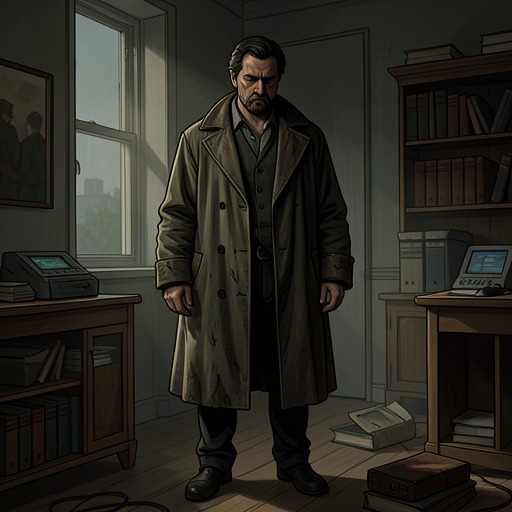
Jake Barnes and the Broken Future
This flow traces Jake Barnes's effort to construct a workable life around an injury that makes conventional romance impossible.
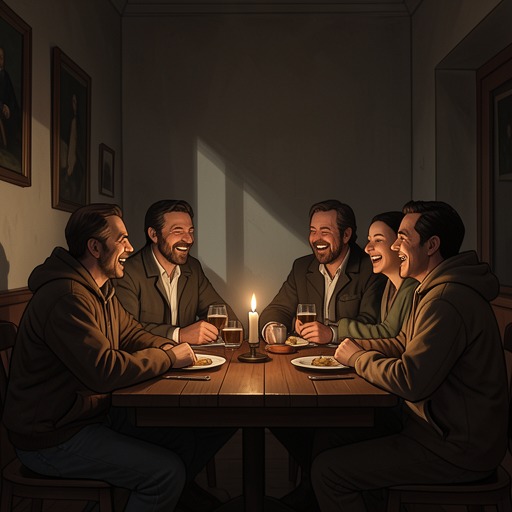
The Fiesta's Escalation
This flow follows the movement from casual expatriate entertainment to a festival crisis that exposes the group's buried rivalries.
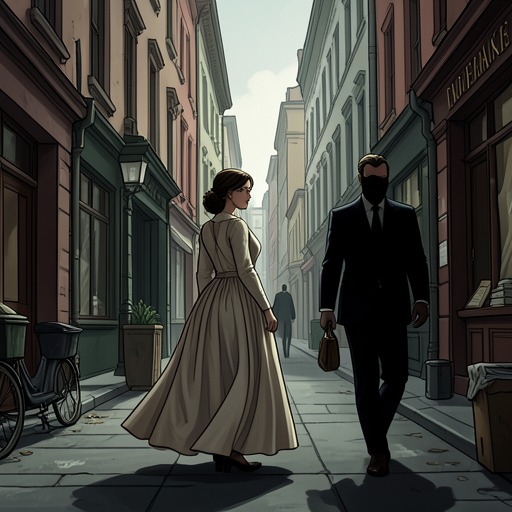
Brett and Romero
This flow traces Brett's movement from restless social freedom toward a brief relationship with Romero and its deliberate renunciation.
